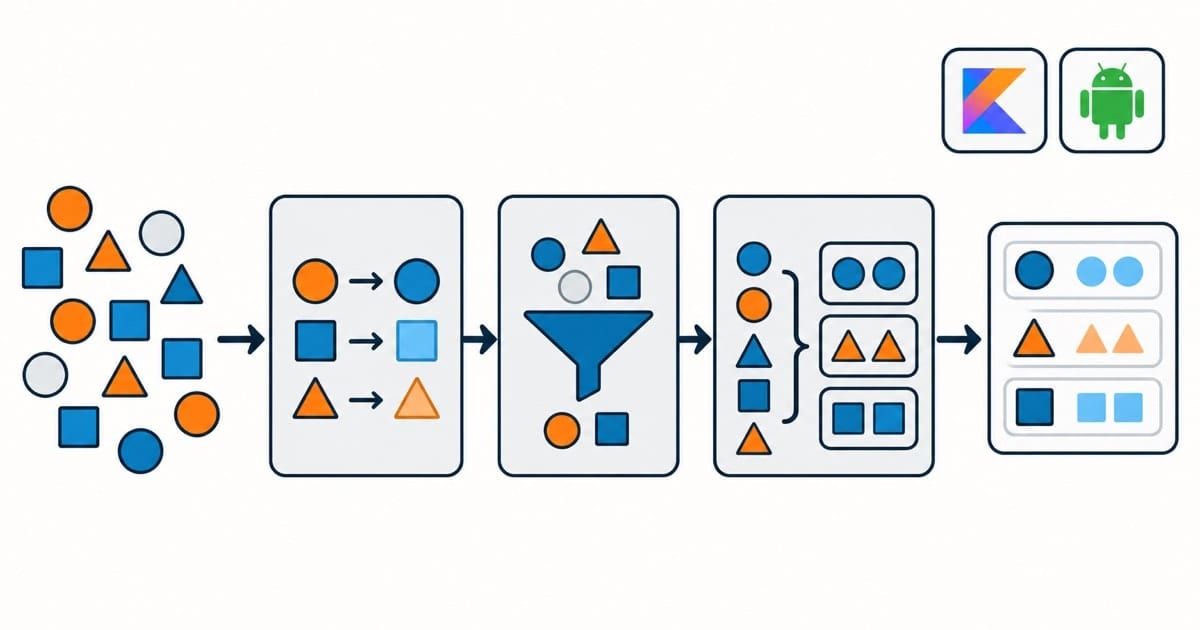
Kotlin 集合体系
| 接口 | 功能 | 可变性 |
|---|---|---|
List<T> | 有序集合,允许重复 | 不可变 |
MutableList<T> | 可变列表 | 可变 |
Set<T> | 无重复元素集合 | 不可变 |
Map<K, V> | 键值对映射 | 不可变 |
val immutableList = listOf("A", "B")
val mutableList = mutableListOf("A", "B").apply { add("C") }
常用扩展函数
1. 变换类
map、flatMap、mapIndexed、mapNotNull
val titles = articles.mapNotNull { it.title?.takeIf(String::isNotBlank) }2. 过滤类
filter、filterNot、filterIsInstance
val systemNotifications = notifications.filterIsInstance<Notification.System>()3. 汇总类
fold、reduce、groupBy、associateBy
val totalUnread = dialogs.fold(0) { acc, dialog -> acc + dialog.unreadCount }

val dialogMap = dialogs.associateBy { it.id }
4. 排序与去重
sortedBy、sortedWith、distinctBy
val sorted = messages.sortedWith(compareByDescending<Message> { it.pinned }.thenByDescending { it.timestamp })序列(Sequence)
val result = generateSequence(1) { it + 1 }
    .map { it * 2 }
    .take(5)
.toList() // [2,4,6,8,10]- 序列采用惰性求值,适合处理大数据量或无限序列。
- 注意在 Android 中避免在主线程执行复杂序列操作。
Android 业务案例
1. 列表差分更新
fun calculateDiff(old: List<User>, new: List<User>): DiffUtil.DiffResult {
    val callback = object : DiffUtil.Callback() {
        override fun getOldListSize() = old.size
        override fun getNewListSize() = new.size
        override fun areItemsTheSame(oldItemPosition: Int, newItemPosition: Int) =
            old[oldItemPosition].id == new[newItemPosition].id
        override fun areContentsTheSame(oldItemPosition: Int, newItemPosition: Int) =
            old[oldItemPosition] == new[newItemPosition]
    }
    return DiffUtil.calculateDiff(callback)
}
结合 map、groupBy 可在数据刷新前进行预处理。
2. 多模块配置合并
val config = buildList {
    addAll(commonConfig)
    if (BuildConfig.DEBUG) add(debugConfig)
    addAll(remoteConfig)
}

val configMap = config.associateBy({ it.key }, { it.value })
3. Flow 数据映射
val uiState = repository.observeArticles()
    .map { list ->
        list.groupBy { it.category }
            .mapValues { (_, items) -> items.sortedByDescending { it.publishTime } }
    }
性能优化建议
- 使用
Sequence或asSequence()处理大型集合。 - 避免嵌套
map/filter导致多次遍历,可组合使用mapNotNull等函数减少中间集合。 - 对频繁调用的计算结果使用
cache或lazy缓存。
调试技巧
val result = items
    .onEach { Timber.d("step1=$it") }
    .filter { it.isValid }
    .onEach { Timber.d("step2=$it") }
.map { it.toUiModel() }onEach可用于插入调试日志而不影响链式结果。
实战案例:集合 API 是 Kotlin 最”爽”的部分
Kotlin 的集合操作(map/filter/groupBy/associateBy)和 Dart 的 Iterable 方法几乎一一对应,但 Kotlin 多了两个杀器:
associateBy:users.associateBy { it.id }一行得到Map<String, User>。Dart 里要写Map.fromEntries(users.map((u) => MapEntry(u.id, u))),啰嗦三倍。我在手写 JSON 工具(ygking_json_to_dart_model)里,大量用 Dart 的map.forEach((key, value) => ...)遍历,Kotlin 侧直接map.forEach { (k, v) -> }解构,更干净。- Sequence 惰性求值:
list.asSequence().filter { }.map { }.toList(),中间不产生临时集合。Dart 的Iterable默认就是惰性的(map返回 lazy Iterable),Kotlin 反而要显式asSequence()——两边默认值相反,切换语言时注意。
还有个冷知识:Kotlin 的 listOf 返回的是只读视图(List),mutableListOf 才是可变的。Dart 的 List 默认可变,List.unmodifiable 才只读。这个默认值差异,是 Java 系”防御性拷贝”文化的遗产,初学者经常在”为什么 add 报错”上卡半天。
一句话:Kotlin 集合库是”把 Guava 内置进了语言”,Dart 是”标准库够用但得自己拼”。各有千秋。
参考:Kotlin 官方文档《Collections overview》
总结
- Kotlin 集合框架通过丰富的扩展函数简化数据处理流程。
- 合理利用序列与不可变集合,可提升性能并减少副作用。
- 在 Android 场景中,将集合操作与 DiffUtil、Flow 等框架结合,能实现简洁高效的数据流处理。
下一篇将介绍协程基础与调度器,为异步任务打下扎实基础。